




Introduction
The shopping experience has undergone a major digital transformation with more users relying on AI tools like ChatGPT and Gemini for online search and shopping. Users no longer have to navigate through many web pages in order to find product suggestions, compare prices and even complete the purchase, as AI can do this in just one interaction.
This leads to the trend towards “zero-click” and AI-powered searches, which show users answers and purchase recommendations without requiring them to click the search results. With the emergence of AI assistants in online shopping, companies must rethink their approach to create and optimize their digital commerce platforms.
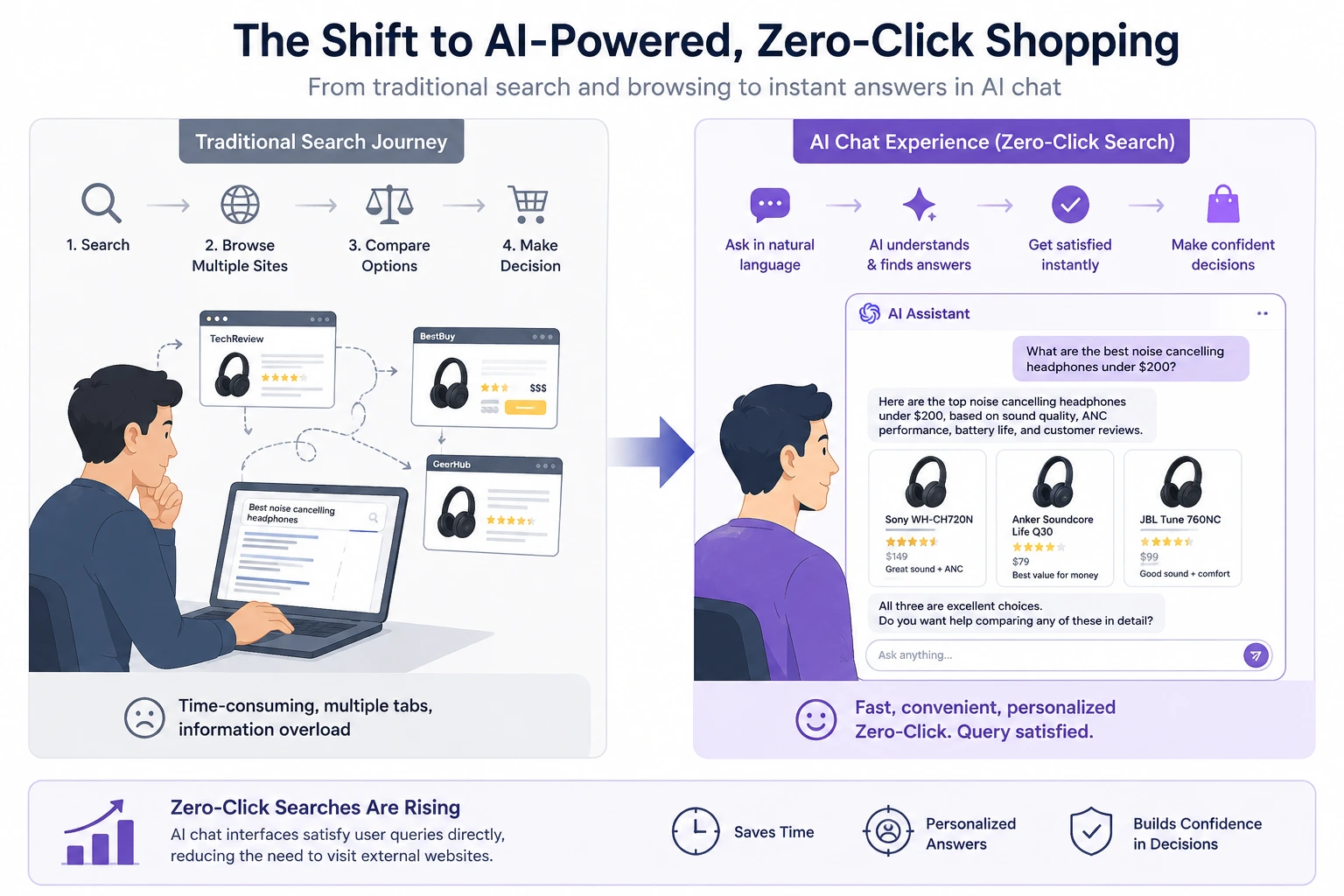
These organisations need to reconsider their commerce architectures towards a more flexible, composable, and agile approach that can accommodate the emerging interaction with the future commerce channels.
Why Composable Commerce is the Answer
AI-integrated shopping experiences and novel tech tools such as personal shopping agents are just a couple of the trends that modern-day digital commerce platforms must continue to meet as customers’ expectations shift.
That’s where composable commerce comes into play.
Composable commerce enables companies to manage various components of their commerce system, like product catalogs, pricing, checkout, payments, and customer management, independently and flexibly. This makes innovation faster and easier, and the introduction of new technologies into the process becomes easier.
In order to easily experiment with emerging technologies such as AI-powered shopping, conversational commerce, agentic commerce, or other future channels, organizations must have flexible architecture that is easy to modify and scale. That is where platforms such as commercetools which follows MACH-based architecture comes into the picture.
The MACH approach offers several benefits:
- Commerce services can be developed and scaled independently with microservices.
- API-first design promotes easier integration with AI tools, enterprise systems or other emerging technologies.
- Cloud-native infrastructure supports benefits such as scalability, reliability and efficiency.
- Headless architecture can be used for various customer interactions like websites, mobile apps, voice assistants,AI interfaces, etc.
Composable commerce can be implemented with MACH principles, allow businesses to be more innovative, easy to integrate with new technologies, and allow customization for better customer experience.
Strategic Steps for Building AI-Ready Commerce Platforms
1. Modernizing the Core Without Disruption
Legacy monolithic systems cannot be modernized overnight. Businesses need a steady and organized approach to modernization, backed by a clear digital transformation plan. This modernization should be planned in a way that reduces interruptions to current operations and maintains business continuity.
The keys to creating a successful modernization roadmap involve a systematic process to reduce the amount of technical debt you build up in a flexible and API-based architecture that will provide an opportunity to drive innovation faster, grow your company in a more scalable manner, and provide for seamless integration of current and future digital services.
2. Achieving Seamless Enterprise Orchestration
For a commerce platform to run in isolation is tough. Commerce platforms need to be seamlessly connected with other enterprise systems to have a single source of truth, essential for providing consistent customer experiences.
This includes integrations with:
- OMS (Order Management Systems)
- PIM (Product Information Management)
- CRM (Customer Relationship Management)
- ERP (Enterprise Resource Planning)
- CMS (Content Management Systems)
With all inventory, pricing, customer data and workflows accurate, synced, and accessible via all customer touch points and AI interfaces, businesses can deliver a seamless shopping experience across all channels.
3. Providing Customised, High-Performing Frontend Experiences
With AI’s constant evolution in the market, traditional storefront templates are no longer enough. In today’s era of users, businesses must provide a highly personalised, fast, and scalable user experience on the frontend.
API first architectures enable brands to develop custom digital experiences on the web, mobile apps, conversational AI interfaces, and any other channel that could emerge later. Additionally, custom backend applications like custom Merchant Center tools can help to optimize operational work and can support other unique requirements of businesses.
AI-Assisted Commerce and the Future of Shopping
AI-Assisted Commerce is the next frontier of the shopping world. Businesses will need architectures and protocols that will enable AI systems to directly interact with commerce platforms to make these AI-driven experiences possible. Agentic Commerce Protocol (ACP) is a standard to facilitate AI assistants to ask structured, safe and secure product information from the business, to know what is available, the price, how it’s paid and what checkout options exist.
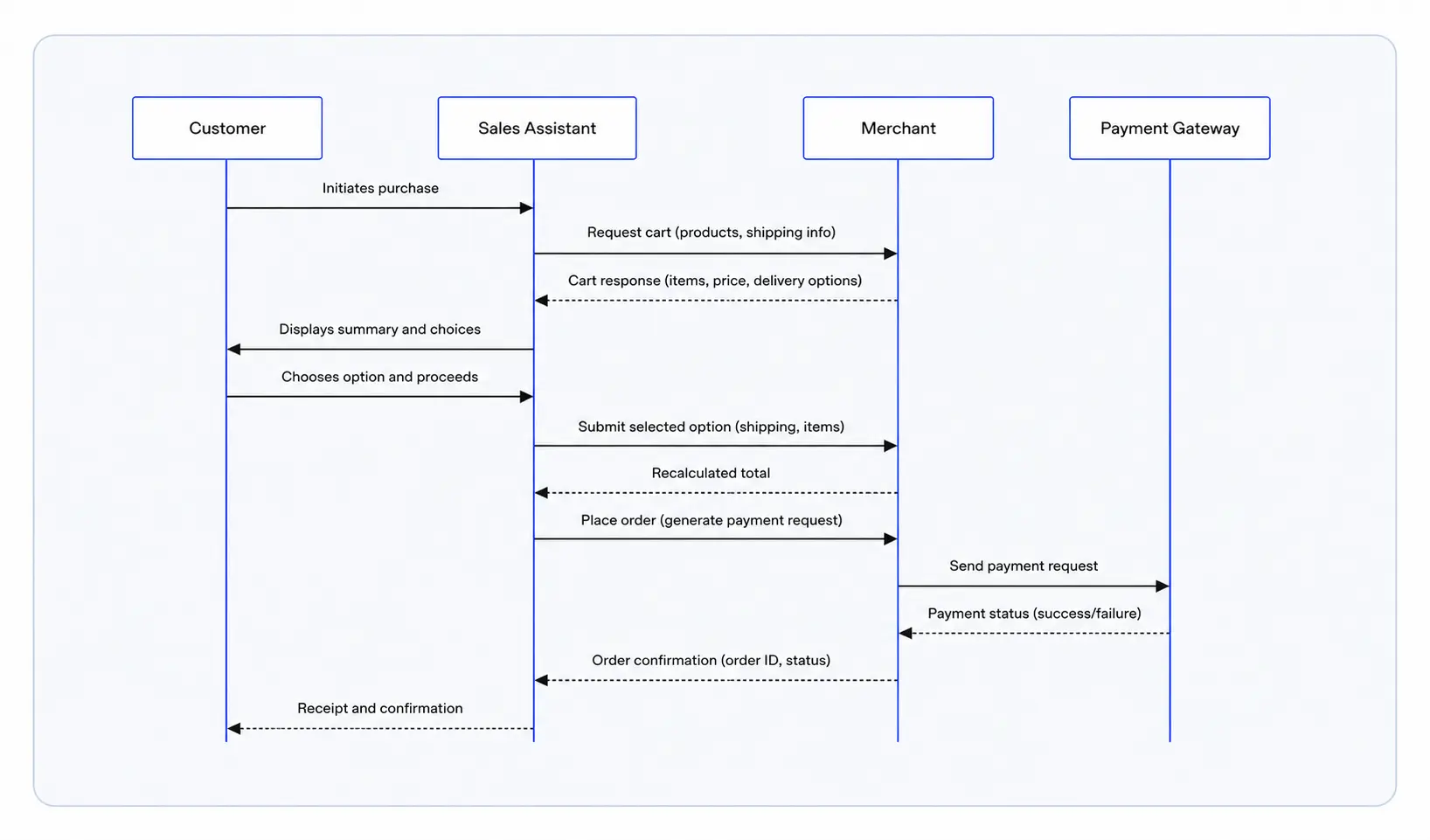
Let Alt Digital Technologies help you integrate, customize, and optimize solutions like Agentforce to align with your digital transformation goals. Connect with us today.
Conclusion
Creating scalable and future-proof commerce ecosystems is a combination of strategic and technical know-how. The flexible architecture is crucial to businesses in order to keep their customers satisfied and achieve AI-driven shopping experiences. To meet the changing needs of their customers and to build AI-powered shopping experiences, businesses need to get over the limitations of monolithic platforms and choose flexible architectures.
In today’s ever-changing digital world, organisations must be ready for change, and at Alt Digital Technologies, we are committed to supporting them in this direction by offering them Composable Commerce solutions through tools like commercetools. Whether it’s strategy consulting, enterprise integrations, custom frontend development, or scalable API-driven solutions, we’re here to support brands on their journey toward agile, AI-driven commerce solutions.
With the modern composable architecture, businesses can attain more operational efficiency, boost innovation, maximize ROI, and look forward to the next generation of AI-powered and other emerging commerce experiences.
Ready to future-proof your digital commerce strategy? Contact our team of experts today.